It is not easy to write something about Christmas without falling into rhetoric or banality. I then begin to purposely enter into clichés, or presumed clichés, to orient myself in this tangle and try to get out of it. The Christmas time I lived as a child was a long-awaited time, it had a well-defined location of two or three weeks at most. The wait could last all year and get underway in the last month. Now in our cities and on TV we start from mid-October and extend to the end of January. It is as if every day were Christmas, but not in the sense of the discovery of a God who can be born in our hearts every day. So which Christmas are we talking about? There is that of sacred music and that of pop catchphrases; the Christmas of school plays and that of children without rights; the Christmas of company dinners and that of soup kitchens; the Christmas of holidays and travels and that of those fleeing poverty and war; the Christmas of the last book and the last film in the ranking and that of the Word that is forever; the Christmas of lights and decorations and that of the cities struck by the flashes of war…
To the lack of anticipation is added, for most, also the absence of a precise reason for the party. The English term Christmas = Mass of Christ at least retains a direct reference to the birthday boy; the German Weihnachten emphasizes the sacredness of the nights; the Latin languages with Navidad, Noel and Natale reduce what was the Nativitas Domini to a birthday without a starter. Someone has proposed introducing the Winter Festival, a sort of return to the ancient pagan festival of Sol Invictus, then replaced by Christmas starting from the fourth century AD. Here the pagan matrix re-emerges in an increasingly evident way in facts, if not yet in the name.
The work is completed by the strenuous defenders of the Christian “tradition”, or of the deep cultural roots of Christmas. I don’t know if they are just a typical Italian thing, but for years the specious controversy of the usual indignant has been rekindled on social networks and in television debates: in such a school the nativity scene has been banned because it is discriminatory … they censor and change the words of Christmas carols… we are losing our traditions because of immigration… The enemy is always the same: welcoming those who are different from us makes us forget who we are. Instead, the commodification of Christmas as a commercial and tourist fact is absolved and encouraged.
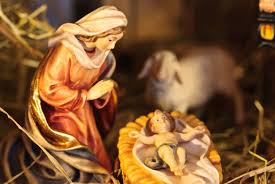
To get out of the tangle I propose to contemplate the open arms of the baby Jesus, a first small welcoming embrace addressed to those present at the time and to each of us; Later on will be the wide open arms of the crucifix, nailed in an endless embrace and for everyone. So let us wait for this embrace, let us prepare ourselves to receive it, to reciprocate it and to give it in turn.
Paolo Serafini, Lay Marist from Italy